

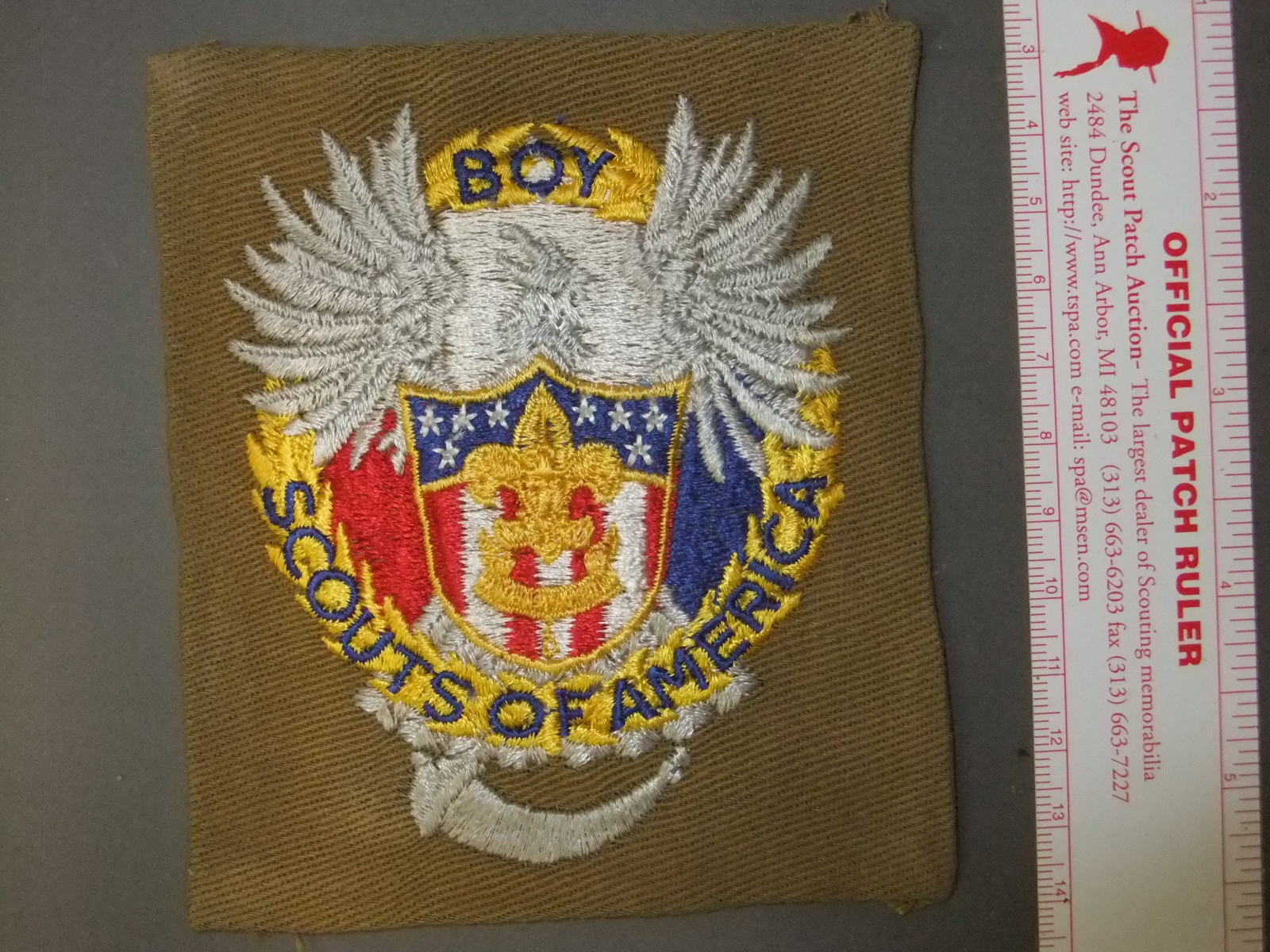
Merit Badges were made with silk thread

Posted on October 2nd, 2007 in Merit Badges by Roy

There have been some recent articles in ISCA about merit badges. One part of the discussion was questioning whether merit badges were made using silk thread. We brought this up a couple of years ago as we offered up narrow tan merit badges (circa late 1930s to 1945) that identified versions embroidered with silk thread and versions embroidered with cotton thread. This change over in thread types occurred sometime during the WW2 years. The collectors of adult insignia or youth rank badges have known of the thread difference for at least a decade (see Terry Grove’s books on Eagles or Paul Myers’ books). Some collectors of merit badges though have still been in denial. Unfortunately Terry and Paul’s work was ignored by some merit badge experts.

Cover of 1933 BSA Uniform Badges and Insignia book

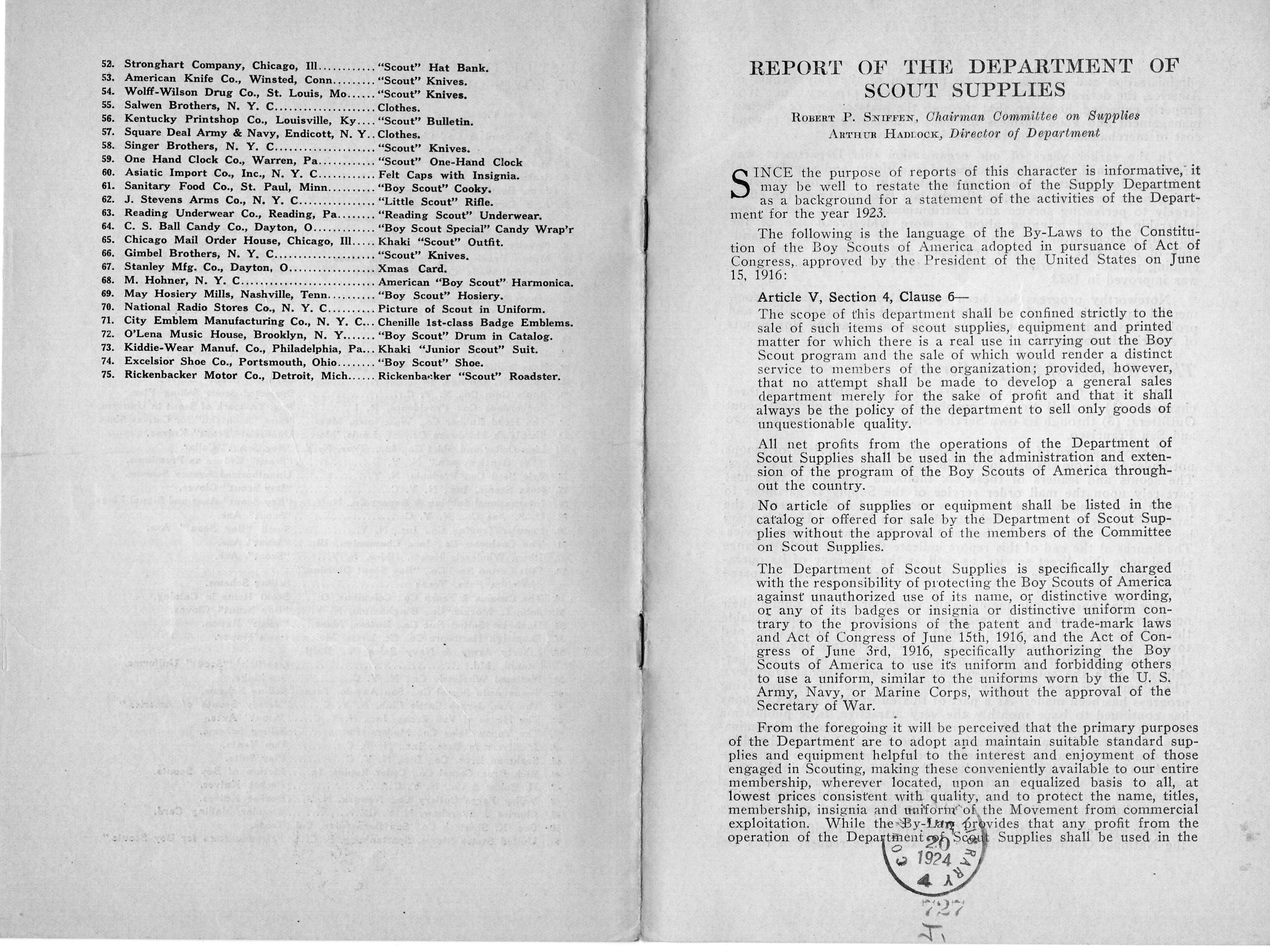
Well, as we have been preparing the auction of a very nice collar pin collection we opened up one of our favorite reference books Uniform Badges and Insignia the BSA published in 1933.

bsaunfpage.jpg

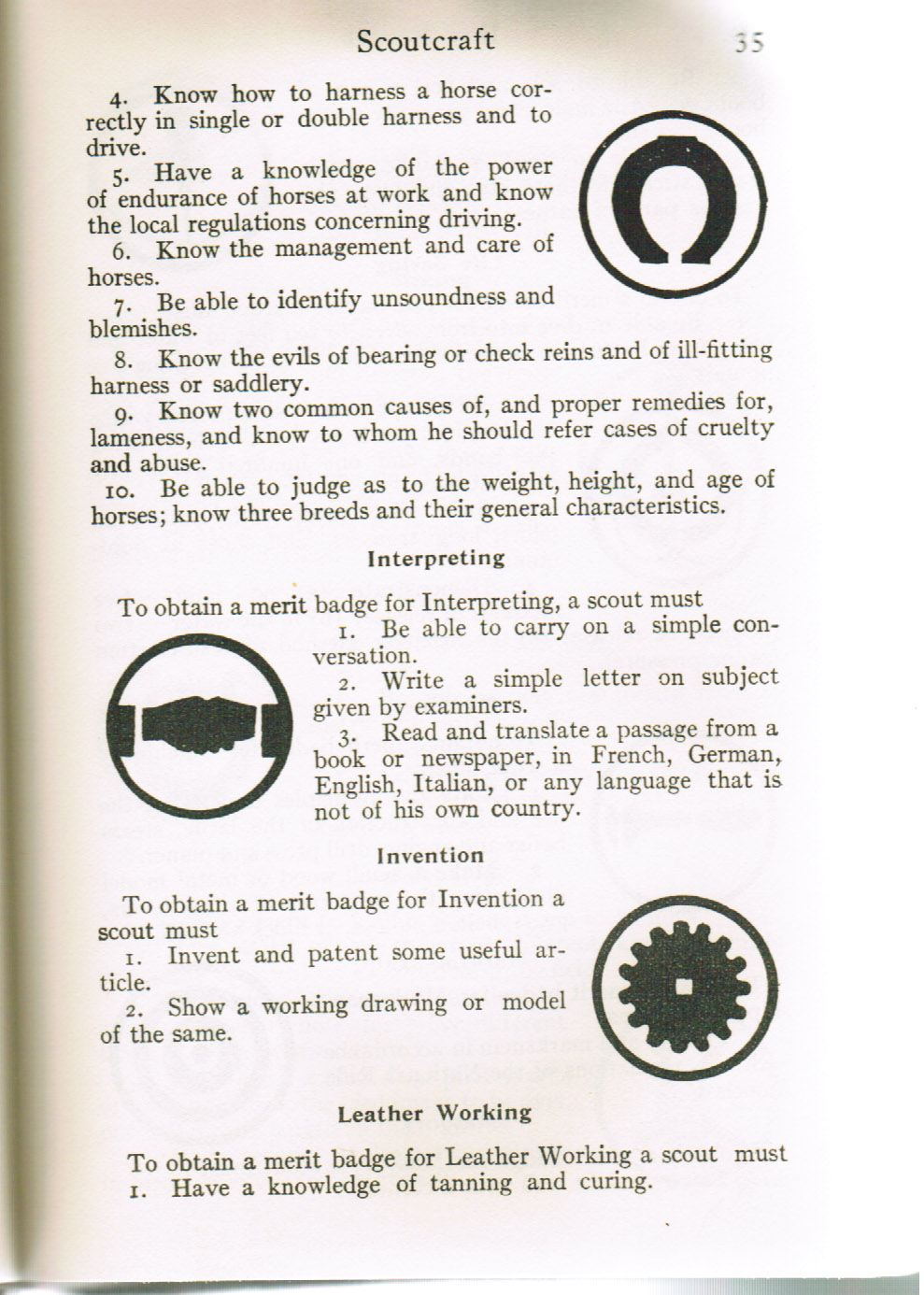
Going into the book, there is a section on merit badges. In black and white they note that the patches are embroidered in silk on khaki cloth. bsaunfmb.jpgI am not sure what better documentation to come up with for those still in denial.

Collecting Patrol Insignia

Posted on August 17th, 2007 in Insignia by Roy

A fun little collection that I put together is a type-set, one of each type, of patrol identification. I use this for displays at troop and council activities as it catches folks attention. They can connect to the collection because of the current badges that they’re familiar with or from the ones when they were kids. From this connection, they then get interested in the earlier versions. I include some information as to when each were used as well as that although some look the same from the front there are noticeable differences on the back. I’ve been able to put together not only a type-set but a type-set of the same patrol.

Here’s what I’ve included:

Boy Scout Flying Eagle patrol ribbon circa 1925 Flying Eagle patrol ribbon. Patrol ribbons were used from 1911 to 1929. The earliest ones were 5 1/2″ long. This one is 4 1/2″ which puts it in the 1925-1929 era. This is the style of patrol identification that England use and the BSA adapted it. What makes the BSA versions distinctive from UK versions is the flat metal bar and prongs, or tab, used to hold the ribbon to the shirt. UK versions used a safety pin. Someone can fill me in but some countries may still be using patrol ribbons to this day. Being here in Michigan we often see Canadian versions that are not that old and thus confuse novice collectors here thinking they have a really old piece of insignia and they don’t.

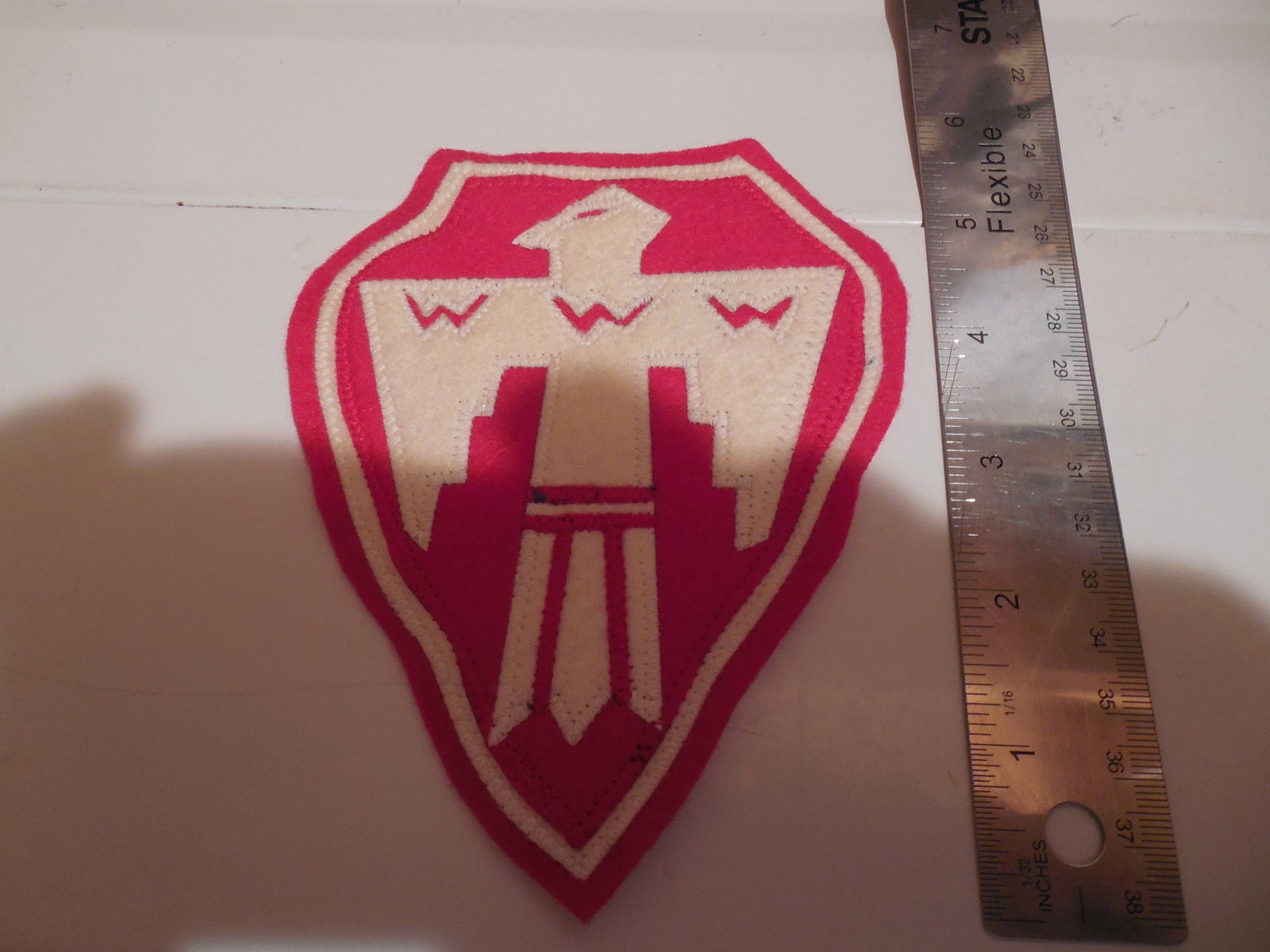
Boy Scout Flying Eagle square patrol medallion circa 1925-1929 A square patrol medallion used from 1925-1926 and only in a few select councils. The reason for going to symbols was because people could not remember which combination of patrol colors go with which patrols unless they got out their handbook. These were screen printed on square pieces of felt. We still do not know how many different ones exist. In theory there could be 50 just like the patrol ribbons. The top collectors of these have between 10 and 20 different. A nice collection has 5 to 10, they are that hard.

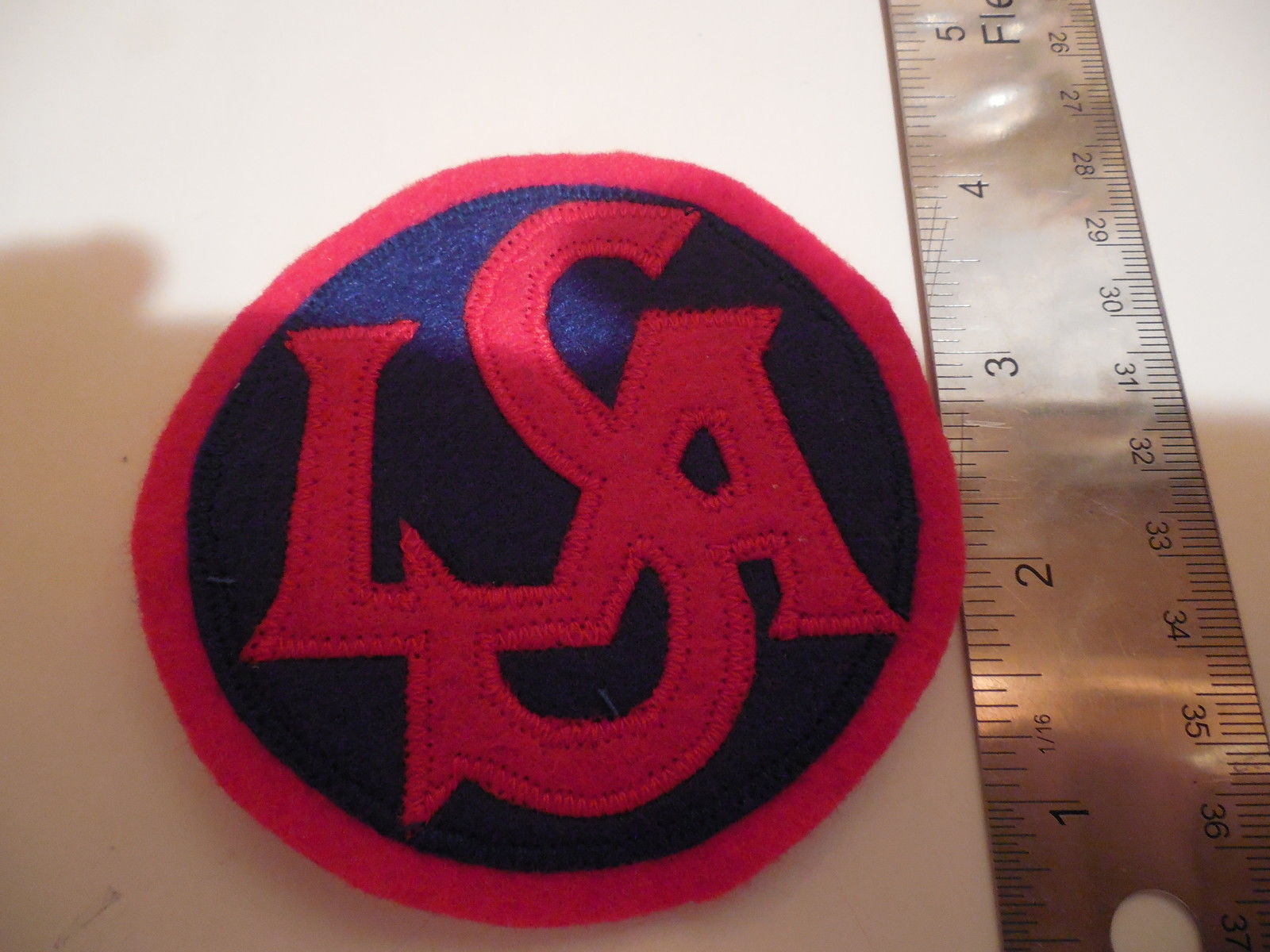
Boy Scout Flying Eagle different versions of round patrol medallions 1927 - 2007 After the successful test of the square patrol medallions, the BSA went to round versions. They also went to embroidering the patches rather than screen printing. The first ones, used from 1927 to 1933, did not have BSA on them and were made of felt. They added BSA in 1933 but kept it on felt. In 1953 they switched to red twill. In 1972 they went to multi-colored twill (no example pictured) and dropped BSA. In 1989 they went to tan twill.

Even though some of the material was used for a long period of time, felt and later twill, there are noticeable differences when one turns them over.

Boy Scout Flying Eagle backs of different versions of round patrol medallions 1927 - 2007 The felt BSA come in what is called ‘black back’ and ‘white back’. The difference was the color of the backing thread used in the embroidery process. Black backed patrol medallions were used from 1933 to the late 1930s. The white backed ones were used from 1940s to 1952.

In the red twill patches there are three types of backs - rubber back, paste back, and plastic back.

Boy Scout rubber backed patrol medallion with differences shownI don’t yet have an example in Flying Eagle but in the rubber back there are even two more varieties - where the ‘rubber’ backing material is completely over the embroidery or under the embroidery. Here’s an example though for Frontiersman.

Collectors have taken these further and pursued even more varieties! As with any Scout badges used for so many years and made by different manufacturers there are even more varieties although the ones listed here are what we consider the major versions.

Rare Scoutmaster Patch Surfaces

Posted on July 7th, 2007 in Adult Position Badges, Insignia by Roy

We are always scanning web-sites and auctions for interesting pieces of Scouting memorabilia. This past week an interesting patch blanket auctioned on eBay. (An aside - You have got to love patch blankets as you wonder if there’s a pony in there somewhere. Although, as one ‘patch digger’ said “As soon as I see that the patches were sewn on to a blanket or coat, I immediately drop my offer because the person has already indicated what they think their items are worth. Not much if it can be sewn on to a blanket.”)

Back to the story - the blanket had a number of mostly 1960s era patches out of the Del-Mar-Va area. There were some older pieces but in general not very note worthy. There was an interesting, at least for us red and white collectors, homemade strip that said “The Hague/Netherlands”. If it had been US made, “Katie bar the door” as the saying goes. But, since it was hand made, its a curiousity piece and nothing more.

What was interesting though, and actually much earlier than most of the other patches was a Type 2 Scoutmaster. Destry picked up on that it seemed wierd but he was thinking about the line-in-crown issue of this patch which was used only one year. No, this is the no-line issue that was used from 1920 to 1937 but what sets it apart is the style of the eagle and the way the feathers lay-out. Also, the knot hanging from the scroll is unlike any of the other knots. The eagle’s talons stretch into the petals of the FDL. Its almost like one of those “What’s hidden in this picture” puzzles.

Here’s a picture of the patch.

Rare Straight Wing Type 2 BSA Scoutmaster Patch

Note that the top of the eagle’s wings go straight across. The standard version has the eagle feathers following the curve of the First Class badge, a different hanging knot and many other differences. See below

Type 2 BSA Scoutmaster Patch on gabardine

In talking with one expert collector, he indicated that this issue is known in both Scoutmaster (white outline) and Assistant Scoutmaster (yellow outline) but that this is only the second straight-wing variety he has ever seen. Now, he has seen a lot of patches but we do not know what people have in their collection and don’t realize it. Maybe you need to go check?

Why this variety exists, we don’t know. It is probably due to a different manufacturer. It would make sense that there must be a production run of these unless they were a manufacturer’s sample that has gotten into the mix. This style of eagle, almost a more military style eagle, does not appear on other badges of this era or later for that matter.

Paul Myers on Early BSA Non-khaki Badges

Posted on June 13th, 2007 in Podcasts, BSA Info, Adult Position Badges, Insignia by Roy

This will be a first for us, and pretty much the hobby, as we’re publishing a “podcast” of an interview we recently did with Paul Myers discussing the different uniform cloth the BSA used and the badges that match them.

Some background

Paul is a leading authorty on BSA insignia as he has been a collector and researcher of this area for over forty years (boy he sure looks young!). He has published many articles and books on BSA memorabilia. His most recent is a full-color edition of Collecting Boy Rank badges. Paul has received numerous awards and recognitions for his contributions to the hobby.

Why a podcast? Well a picture they say is worth a 1,000 words so what is a moving picture and sound worth? That is, we think we can show and say more to explain things in our hobby that we could never write to paper (or computer file).

Our position within the hobby gives us access to leading collectors and authorities in the hobby. We think showcasing them and sharing their hard developed knowledge will benefit all. We’ll see how well this works. The files are huge (maybe some of our younger readers can give me some pointers here) but we think worthwhile. Please let us know what you think.

We hooked up with Paul recently at the Calumet Council TOR over the Memorial Day weekend. In this podcast, Paul talks about how in the 1920s through the 1940s the BSA made uniforms in many different types of material other than cotton khaki. These include serge, gabardine, wool and a material I’ve been wondering about ‘melton’. The uniforms were made in these materials and listed in the equipment catalogs. The question on my mind, and Paul’s as well, is “Do badges exist in these materials to match?”

 
icon for podpress  Paul Myers on BSA Uniform Cloth Insignia [7:37m]: Play Now | Play in Popup | Download

No BSA Patrol Medallions - Round Series from 1930s

Posted on April 6th, 2007 in Insignia by ramore

We have had many interesting things come through our hands over the years. As we go through some of our archives, I thought I would post some to our blog for your viewing pleasure.

Pictured here and in the following links is a complete set of the 1930s no BSA round felt patrol medallions . These came after the square felt patrol medallions which were an experiment out of Washington, DC in the early 1930s. They proved to be more popular than the patrol ribbons, also called patrol flashes, that were in use previously. The square patrol medallions were not used everywhere. The round ones were. There may be only two or three complete collections of these in the country. These pictures are from Bernie Miller’s collection. Can you name them all? I think the pictures have them in alphabetical order.

No BSA Patrol Medallions picture 1

No BSA Patrol Medallions picture 2

No BSA Patrol Medallions picture 3

No BSA Patrol Medallions picture 4

No BSA Patrol Medallions picture 5

Info on Colonial Philadelphia Merit Badge

Posted on January 28th, 2006 in Merit Badges by dhoffard

We have running the cloth back, green border version of the Colonial Philadelphia merit badge. This was a special merit badge issued by Philadelphia Area Council. We got some more information in from a collector:

This badge was only made from 1975-1976 for the Bicentennial. This cb variation was a manufacuturing plasticizing error. It’s not a (true cb) as it wasn’t made from 61-71.

mbcolphilgbcb1.JPG

I’ve got in my collection the merit badge booklet, locally made, for this badge. We’ll try to get a picture posted as well.

Web-site for Fake Scout Patches

Posted on January 24th, 2006 in Fakes, Insignia by dhoffard

Heard from Mitch Reis today. Thought it worth saving for posterity. Mitch has done some very nice books on Scouting insignia so he knows his stuff.

Hi Roy

I just stumbled on your web log and loved reading through it.

I see you have pictures of a Fake Tenderfoot Achievement Patch.

Can I add the picture to the fake insignia section on my website?

Mitch Reis’ web site on BSA Fakes click here

I have a zero tolerance for fakes and want to spread the word wherever I can.

Mitch

Commissioner Arrowhead Award documentation

Posted on January 6th, 2006 in Insignia by Roy

From time to time I’ve had come through our hands gold arrowheads and silver arrowheads as well as the current white arrowheads. The white arrowheads are well known as a Commissioner award. I had been told the gold was also but an earlier version. No one knew though what the much rarer silver arrowhead represented. One of the interesting finds from the Angus MacBryde estate auction was this from his collection. Given that he was in the Supply Division and had access to their records, I’m assuming that his write-up is correct. This would say that the silver was actually the early Commissioner award and that the gold arrowhead was a Scouter award. It would make sense as the gold, although uncommon, turns up more than the silver one.

arrowheadaward1.JPG

Merit Badge backs - a new area to collect

Posted on December 28th, 2005 in Merit Badges, Insignia by dhoffard

There’s always something new in this hobby. Just answered a customer’s question about the type of plastic back on a merit badge we’re auctioning. He needed to know if it was a plain plastic back or has the BSA logo in the plastic. Learn something new everyday. And some thought that those of us who collect thread type, i.e. silk vs. cotton, in tan merit badges were crazy.

And the fakes roll-on - Tenderfoot Achievement out of Germany

Posted on December 21st, 2005 in Fakes, Insignia by dhoffard

It seems like this is becoming the fake reporting blog. Here’s today’s featured un-described fake - a Tenderfoot Achievement patch.

Ok, where to start. Maybe I should play this as ‘find the mistakes in this picture’ game. Being cut-edge is not the give away although the original issue is on square kahki people did cut these down when they put them on their uniform.

Mistakes - CD with polyester thread - these came out in the era of loom embroidery and mostly were of silk thread or some later ones may have had cotton. They did not have a creslon back. The embroidery was more distinct and detailed. The color of the twill was brown khaki, not green. There weren’t that many stars on the eagle’s shield. There are more, such as the design of the eagle, but they are not as easy to pick-up.

Unfortunately one of our customers got burned thinking they were getting a bargain. If they had only contacted us, we would have told them.

tfootfakea1.jpg

tfootfakeb1.jpg