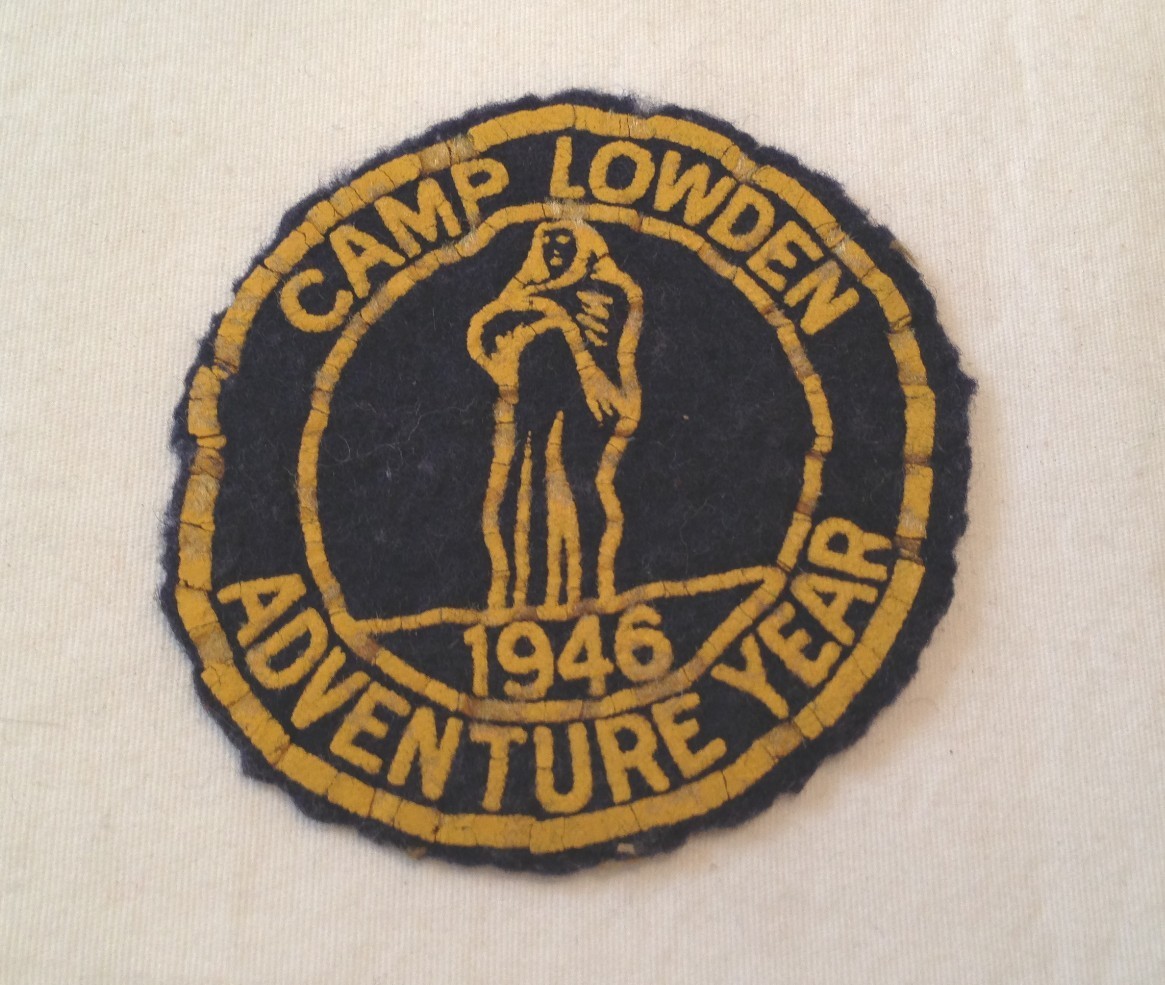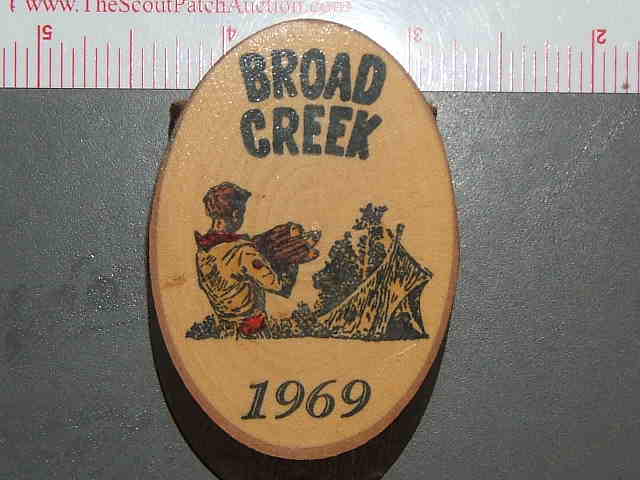


Schiff Society of Singed Eyebrows

Posted on September 7th, 2011 in Camps,High Adventure Bases,Hobby Trends by ramore

If paper could talk. I wonder what the requirements were for the “Schiff Society of Singed Eyebrows”?

This is a cute piece of our history. I don’t know what it was for but through Scouting’s 100+ years we have had many gifted volunteers and staff create some of the most innovative programs and ‘recognitions’. As the certificate makes reference to the person being a “Full, Fledged Fire Bug”. It is part of the fun in Scouting. Scouting builds community and memories. I’m sure all of those recognized by the Consolidated Conflagrationists of America can attest to. Maybe some of them will chime in with their rememberances.

From a collecting perspective, these documents, more so than than just the patches tell the ‘story’ of Scouting. If you can add such items in to your collection, you’ll set it apart from the run-of-the-mill


The Incredible Disappearing Insignia

Posted on September 7th, 2011 in Hobby Trends,Insignia,Rank by ramore

Or sub-titled “Where have all the great rank insignia gone?”

Yesterday I fielded two separate e-mails from very senior collectors about early rank insignia. One was about a Type-3 Life patch (the red knot with HOR red embroidery circa 1919) and the other was about an early Tenderfoot Achievement 2 patch (this was the rank program for disabled Scouts in the 1930s-1940s).

My responses to each separately was the same but different. That is, these are incredibly rare and seldom seen patches. And that their values are understated in the current market precisely because they’re not seen. These can be found for less than their scarcity would indicate but even if you have an open checkbook you can’t find them when you want them. Go figure. For the first, the T-3 Life (and we’re using Paul Myers’ book on Rank Insignia in Color for catalog numbers), we’ve NEVER had one come through in the collections we’ve handled!

In the random rumblings in my head as this discontinuity rattles around I’m thinking there are several pieces/examples of Scout insignia memorabilia that come to mind that are not seen these days. Here’s some of what’s on my list:

  • Type 3-Life (red knot, HOR red)
  • Veteran patches 15yrs and above on SS white or blue
  • Life with yellow knot outside of heart on SS blue or especially SS white
  • Rover Rambler pin (do collectors even know what this is?)
  • Type 1 Tenderfoot (yes this is the lowest rank but originally the rank was represented by a pin. The patch did not come out until 1924 and the design was quickly changed).
  • Tenderfoot Patrol Leader Bugler or T’foot Patrol Leader Scribe (basically a Scout had both positions, PL & bugler or scribe, and their rank was Tenderfoot). Paul taunts us by showing one of these on the cover of his reference work.

What’s on yours?

Note, I didn’t put Type 1 Eagle (the 1924 WJ) or Eagle on Sea Scout blue or the much rarer Sea Scout white. The first patch can bring $10,000 – $15,000 alone. The first Eagle on SSwhite can be $1,500 – $5,000 depending upon condition. The thing is, these patches DO turn up from time to time (say once every few years) but not the pieces on the list above, IMHO.

Update: Here are some sleeper, i.e. rarer than folks realize, issues that you CAN find:

  • The six ranks on fine twill (used during the later part of WW2 say 1943-1945 when the heavier khaki was used for the military). The lower ranks seem to be harder to find than the higher ones.
  • The 2nd Class and Star of the 1980′s series ranks when the badges were bordered and had colored cloth back ground (green on the 2nd Class, blue on the Star) with HOR stitching in the yellow field.
  • Air Scout ‘Explorer’ ranks followed by the no words Air Scout ranks.
  • The thin knot Eagle from the 1960s (Type 5)


Ebay Volumes Continue Their Steep Decline

Posted on August 18th, 2011 in Hobby Trends by ramore

Granted we’re in the dog days of summer as I write this but still I was shocked to see the decline in listing volumes on eBay both at set price (55,370) and auction 9,977. Yes there have been some listing special days and we’ve allowed some of our inventory to time out but there’s also the pouring in of stuff from this summer’s World Jamboree. I blogged about this back in May and we’re down nearly 20% from there. We’re back to 2005 levels and lower. Interesting.

I’ve been of the opinion for a while that eBay is NOT a technology company. If it were, we’d get better service at a lower price over time. We’re getting the exact opposite. They’re looking desperate as they’ve been running more listing fee specials trying to boost their GMV (gross merchandise volume) as that’s a metric the stock market analysts watch. Its not lasting though, IMHO. I know of several dealers that have dropped eBay as a channel. The ‘take’ rate, eBay and PayPal fees, are truly onerous particularly for the price point of our collectibles. We’re doing as much private placement activity as ever before or through our web-site shopping cart.

Not sure where this goes but the trend is clear (when in this kind of economy one would expect eBay volumes to tick up not down).

Why some Scout patches keep going up in price.

Posted on June 13th, 2011 in Hobby Trends,Legacy Interviews,OA by ramore

I write articles for the International Scout Collectors’ Association, ISCA, journal on trends in the hobby. In thinking about an upcoming article and reviewing market conditions in different areas of the hobby prices are holding up or appreciating in some areas but not others. A common thread between the two, in my opinion, is where there has been and continue to be active collecting guides for active areas of the Scout patches.

One of my current thoughts is about major impacts on our hobby that are standing the test of time. One of those is the focus on first flaps. I recently posed some questions to one of the principle authors, Dr. Jeff Morley of California, about the first book on first flaps. When did you begin this focus? Why? What other things when  doing the research that the hobby should know or remember?

Dr. Morley responded:

Hi Roy,
I started collecting first flaps in earnest in the mid 1980′s right after I
completed Green Book II. The information was incomplete and sometimes vague
as there was no picture guide and all we had to go on was a listing in the
Arapaho guide that, as you remember, was fairly good but lacked the
detailed information to make a positive ID on many of the flaps.

After the 1988 NOAC, I had reached a “wall” in my first flap collection. I
was down to about 20 needs (as far as I knew from the info that was
available at the time). So I made a decision to invest in placing ads in
local papers soliciting the first flaps that I still needed. I was not the
first collector to pursue this approach as Gene Berman had been placing
some very limited ads in communities where he was looking for specific
things (like the 214x) but he had never gone after first flaps. At the
time, my effort were very successful and produced some unexpected results.
First and foremost, by 1989, I had located and acquired all 20 of my
remaining needs, the last being the 311 Koo Ben Sho. However, in the
process, I also got a lot of new information from the people that were
contacting me, much of which was either new info or contradicted the
prevailing thoughts at the time of what constituted the “first flap”. The
former arrowmen that I came in contact with were simply members form the
1950′s that had received the flap, they were not leaders, arrowmen that had
continued on in the program or collectors. They were just your average Joe
that received a flap and knew the one or two years they were in scouts and
in the OA.Their info was very factual and not influenced by “folklore” that
had developed in the hobby by the 1980′s. I still have all of my research
correspondence from the late 1980′s with the orignal arrowman rom the
1930′s-50′s that contacted me with information.

My close friend and patch/OA historian extraordinair, Bill Topkis became
very interested in the first flaps in the late 1980′s and by 1990, was
helping with the patch research and information. The original difficulty
ratings for first flaps was developed by both Bill and I as a result of us
both determining what were our last fast flap needs and comparing our
independent collection lists.

So it turned out there were some new discoveries of what the first the
first flap from a lodge was and in particular, which variety was the
“technically correct” first flap. The hobby started to see OA collecting
more in terms of “varieties” in the late 1980′s, I believe largely as a
result of Green Book II (published in 1985) which began cataloging
California OA patches as issues and varieties. Also, what started to become
clearer as time went on was that in some cases (like lodge 96, 146, 189,
237 and others), the first flap issued by a lodge was for an event.
Previously, event patches were not considered actual lodge issues and were
not listed anywhere. But the truth was, like it or not, they were the first
flap shaped patch issued by that lodge and they were the first flap worn on
the uniform from those lodges.

As a result of these efforts, Bill, our friend and past Malibu Lodge 566
chief ,Tom Gould and I talked about how great it would be to publish all
the information we had acquired on first flaps and so in 1991 we started on
the original book. After it was published in 1992, the book became very
popular and at times, controversial. In some cases, local folklore in a
particular lodge considered their first flap to be different from what we
listed. That promoted vigorous discussion and more research. The results
improved the listing. Sometimes Bill and I were right and the folklore was
corrected. Other times, we had a few of the first flaps listed incorrectly
and we were corrected.

The final evolution in the first flap project developed when Dave Thomas
asked if he could collaborate with us to republish First Flaps in a large
glossy color book. Dave was instrumental in taking the information to the
next level and I believe that First Flaps in Color is now considered in the
Scout Collecting hobby as a classic and one of the seminal books in patch
collecting along with the Wabiningo Lodge Emblem handbook, Arapaho, Blue
Book and others.

Where the price surprizes are – Felt Camp Patches

Posted on May 23rd, 2011 in Camps,Hobby Trends by ramore

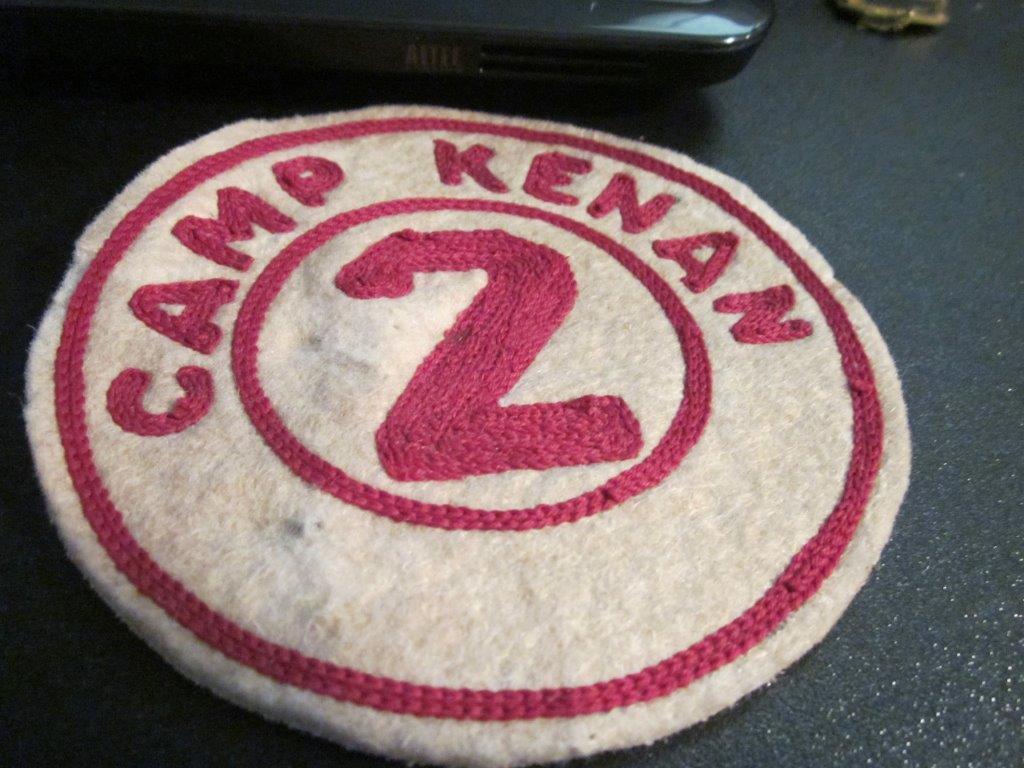
We’re not going to blog about every interesting item that comes through eBay but every once in a while there are pieces that speak to trends in the hobby. This is one of them. Offered up was a felt field cap, probably Army surplus, that had several felt camp patches on them including one from Prince Creek Scout Camp dated 1930. The item realized $1,476. There were two other felt patches on the hat, also probably camp patches but with initials only. So that works out to about $500/patch or more likely $1,000 for the one with wording and $500 for the other two. And that’s the story here. The right camp patches can be four figure values, so long as the buyers are there. For those who did not track the Phil Parlett estate auction conducted a few years ago, the most expensive item sold was a felt Camp Josepho felt staff strip at $3,600.


Why this patch is more important than most realize.

Posted on May 23rd, 2011 in BSA Info,Hobby Trends,NOACs,OA by ramore

The other night on eBay this lot sold:  1946 FELT NATIONAL CONVENTION PATCH-CHANUTE FIELD, ILL

Over the past week I have been answering e-mails with Bruce Shelley, ISCA OA editor, and Dr. Ron Aldridge, author of the two volume book “OA at National Events”. This is the second known specimen to surface in the 60+ years since the event. The participant’s badge was a pin-back button. There was no patch. As Ron pointed out to Bruce:

The first one was found by Dennis Sydlowski in the Richard Marshall collection, sold or traded to Breithaupt, and pictured in the Arapaho book.  It is now a part of the Las Vegas International Scout Museum collection.  When I published my set of books, I was leaning toward the prototype theory as only one was known at that time.  The second one was given to Dennis Sydlowski’s council by R.L. Van Horn.  One came from Michigan and one came from Indiana – this patch might well be a patch made by a council in the mid-west for wear by their contingent members.
In all the years I have researched these early patches, I have seen no evidence that this patch was made or ordered by National.  But then this was one National Meeting before the BSA took over the OA.
So the ebay auction is the second one to surface but that’s not why its important. What’s important is who had it and who gets the money. TSPA became aware of this patch at the Indy TOR in talking with Dave Ramp and Dennis Sydloski. The patch was on display in the council office of Anthony Wayne Area Council. Dennis and Dave asked what the council should do. With out a hesitation I said, “Sell it!”. This was not a significant piece of local council history. The council is not in a position to maintain and preserve it. It has significant value to the hobby so the council should realize the value. Put it into endowment to be sure that Scouting is around in the future.

Bottom-line: Councils are better off to have money in their endowment than non-local patches on display.

EBay volumes WAY down

Posted on May 10th, 2011 in Hobby Trends by ramore

Interesting – eBay Boy Scout auctions now under 10,000 and we’re 750 of these.
Boy Scout category is under 80,000 total listings, that’s last summer’s low when there was a National Jamboree.

EBay’s fee structure may be hitting the collectibles area hard. Most of our items are low priced which makes eBay’s and Paypal’s take too high. IMHO.

Collecting doesn’t have to be expensive

Posted on April 14th, 2011 in Hobby Trends by ramore

At the Dallas TOR and ISCA conference I gave a presentation on trends in the hobby. Some of the observations that I made were; that the Scouts issued more patches in 2010 than any year before; that one could spend the rest of their life just collecting 100th anniversary items, and; that it could cost over $10,000 to get all of the JSPs and jambo issues. One of the participants asked that given so much stuff and what it would cost just for trading stock how can a Scout begin collecting? The answer is, for any Scout or Scouter, is that what to collect is only limited by one’s imagination. One does not have to collect what’s expensive.

As examples, for years a couple collectors in Texas collect ‘o-ree’ patches – not every camp-o-ree but different ‘o-ree’ programs such as ‘freeze-o-ree’ or ‘hike-o-ree’. Destry collects patches with Halloween themes on them. I collect an activity patch from every council (and used to collect state shaped patches).

At the Indy TOR I hooked up with Ted Thompson of Indiana who has a great collection around S.O.A.R. (Save Our American Resources).

Ted has even built a web-site for these. Google gives you these sites and templates for free!

It wasn’t that long ago that red and white community strips were completely ignored. They could be found for a dime a piece. Now many can sell for $10 or more or a 10,000% increase. Not that value increase should drive any collector (its certainly nice but don’t count on it nor let it drive you) but one does not have to collect what is already expensive to have fun. The only limits you have are the ones you place on yourself. Use your imagination to blaze a new trail (and oh by the way, if you have council activity patches in your dupes let me know. I guess I should post my CouncilHaves)

And, if you’ve got a web-site like Ted’s let me know and we’ll post it as well. We all benefit.

Of Sales Seen and Unseen

Posted on March 29th, 2011 in Hobby Trends,Insignia,Jamborees,OA by ramore

Over the past couple of weeks at different TORs (Pittsburgh at the beginning of the month and Detroit at the end) I have had an on-going discussion with senior collectors about a challenge in the hobby. It affects them as they are holders of the super rare and super valuable collectibles. The problem is the vast majority of the hobby does not know what they don’t know. Because they do not know, they do not know the value or more specifically the prices collectors are willing to pay for the rare items.

Some cases in point. In the past three months we’ve placed three (3) Calusas, two (2) Kiminschis, a Monsey, a 155, a Checote, a ’24 US WJ contingent patch, key red and whites/KRS strips etc.. In the past year we’ve privately placed two (2) Balugas, three (3) Zhingwaks, several four figure WAB issues, key insignia and world jamboree items, etc.. All of these were private placements and have not seen the light of day. To most in the hobby these transactions never happened because they weren’t aware of it.

Jason Spangler, the Santee Swapper, runs an e-mail service looking at things on eBay. That’s where the eyes are. He has shown top twenty sellers for each of the past couple of months. We’re consistently at the top by magnitudes over the next highest sellers (there are reasons for this but that’s another topic) but what’s seen in this report is only a fraction of what we’re handling by dollar volume (not necessarily patch volume – we’re shipping 200+ packages a week most with multiple patches).

In addition to the placements we make we are often asked for advice on either the buy side (i.e., “what should I pay?” questions) or sell side (i.e., “What should this sell for?” or “Can you help me place xyz item?”). We may not be involved in the final sale but know of what transaction happened such as several MAJOR insignia collections selling in the past year or two in the hundred thousand dollar range as single sales/single buyer.

Physics tell us, a tree DOES make a sound when it falls in the woods even if no one is around to here it. Private patch sales indicate a value even if only a few people see it. So, how do we educate the hobby? Is this not a problem? Is it those who have these items don’t want collectors to know the value?


Update: As examples, here are some of great Scout pieces that went through us in the past 3 days most which were not offered publicly:

Stag totem pin, Hood

Lodge 24 totem pin (with blue cloissone)


1940 NOAC Medal with Name Badge

Lodge 189 event First Flap


Military’s impact on the early Scouting Program

Posted on January 11th, 2011 in Baden-Powell,Hobby Trends,Podcasts by ramore

The Dallas Trade-o-ree is the best super-regional swap event for Scouting memorabilia. One of the features is their display contest. Collectors bring out some of the rarest and most interesting items to share with the show attendees. (BTW – The 2011 show is January 21-21. See the flyer. Be there if you can.)

For the 2010 show, Kelly Williams, President of Krelman Co., won “Best of Show” with is display of the military influences on the early Scouting program. This is a little known piece of history that he has well researched but even more so he has tracked down the memorabilia that is over 100 years old. It also speaks to what I am seeing as an increasing, positive trend in our hobby. It is not just about putting together a collection of items but reconstructing history through the items.

Here’s a video interview we did with Kelly at the show.


[sales] [forum] [reference] [about us] [contact] [home]

Copyright © 1999 - 2009